

Key Takeaways
- Adult costumes designed for indoor masquerade parties prioritise structured tailoring, heavier fabrics, and controlled mask fit due to stable lighting, temperature, and flooring conditions.
- Masquerade party costumes intended for outdoor events must factor in heat, humidity, wind exposure, uneven surfaces, and durability under prolonged wear.
- Fabric choice, breathability, footwear design, and fastening systems change significantly depending on whether the event is held indoors or outdoors.
- Poor environment-matching in adult costumes leads to discomfort, visible wear damage, and premature costume failure within a single event cycle.
Introduction
Adult costumes are often purchased or rented based on visual appeal alone, yet masquerade party costumes perform very differently depending on whether the event is held indoors or outdoors. The event environment directly affects fabric performance, comfort, wear durability, mask stability, and overall presentation quality across several hours of use. Buyers who do not account for venue conditions frequently experience discomfort, heat retention, garment deformation, or visible damage by mid-event. Knowing how adult costumes must be designed differently for indoor versus outdoor masquerade parties reduces costume failure, improves wearer comfort, and preserves appearance quality across extended event durations.
Fabric Selection and Thermal Performance
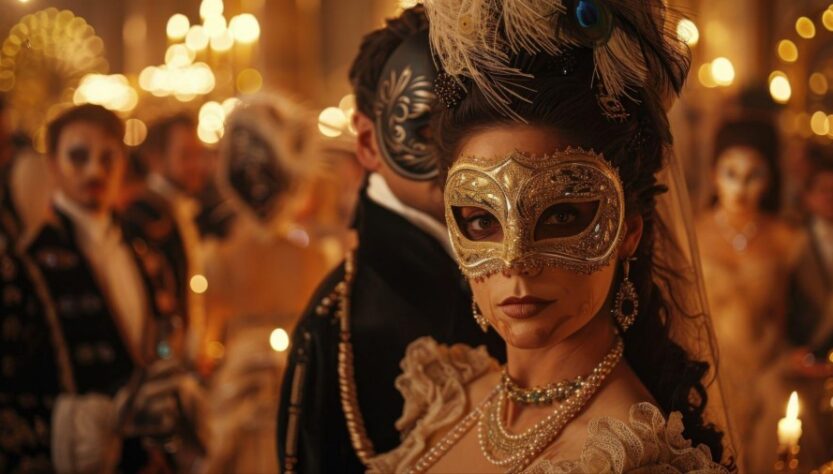
Indoor masquerade party costumes typically use heavier satin blends, velvet, brocade, and layered synthetics because air-conditioning, controlled humidity, and flat flooring reduce heat and moisture stress on garments. These fabrics hold structure well under stage lighting and artificial illumination, producing sharper silhouettes and stronger visual contrast in formal ballrooms or function halls. Adult costumes for indoor events can therefore incorporate lining, boning, corsetry, and multi-layered skirts without compromising wearer comfort.
Outdoor masquerade party costumes require lighter, breathable materials such as mesh-backed synthetics, cotton blends, lightweight poly-satins, and perforated linings. Heat build-up becomes a primary constraint, particularly in tropical or humid climates where thermal discomfort escalates quickly under masks and wigs. Adult costumes designed for outdoor use must allow airflow across the torso and shoulders while retaining visual integrity. Heavier fabrics trap heat, retain sweat, and crease under prolonged movement, resulting in visible distortion by the end of the event.
Structural Design and Movement Tolerance
Indoor masquerade party costumes can rely on rigid silhouettes, narrow sleeves, floor-length hems, and structured accessories because movement occurs on even flooring with minimal environmental interference. Long trains, fitted cuffs, and layered capes perform well under controlled spatial conditions and limited wind exposure. Adult costumes in indoor venues can therefore prioritise visual precision over movement flexibility.
Outdoor masquerade party costumes must be designed with higher movement tolerance. Wind, uneven surfaces, and higher walking distances place stress on hems, seams, and fastenings. Shorter hemlines, reinforced stitching at movement points, and flexible closures reduce failure risk. Adult costumes that lack these adjustments frequently suffer seam splits, mask displacement, or fabric tearing when worn outdoors for extended periods.
Mask Construction and Wear Stability
Indoor masquerade party costumes can accommodate heavier masks made from resin, metal trims, and layered embellishments because lighting is stable and wear duration is shorter. These masks hold position more reliably under controlled temperatures and lower sweat levels. Adult costumes paired with heavier masks also maintain visual symmetry under consistent lighting angles.
Outdoor masquerade party costumes require lighter mask construction using thermoplastics, lightweight composites, or reinforced fabric bases. Sweat accumulation and temperature changes cause heavier masks to shift, loosen straps, and irritate skin. Mask ventilation and adjustable fastening systems become necessary for outdoor use. Adult costumes that rely on rigid masks outdoors experience higher failure rates through strap slippage and wearer discomfort.
Footwear and Surface Compatibility
Indoor masquerade party costumes often include rigid formal footwear designed for smooth flooring, such as polished shoes, costume heels, or stylised boots with narrow soles. Stability requirements are lower due to even walking surfaces and controlled lighting. Adult costumes designed for indoor events can prioritise visual consistency over traction.
Outdoor masquerade party costumes must use footwear with broader soles, grip textures, and moisture-resistant materials. Uneven ground, damp surfaces, and prolonged standing increase slip risk and fatigue. Adult costumes paired with unsuitable footwear reduce the wearer’s mobility and increase event disruption risk.
Conclusion
The design requirements of adult costumes change significantly between indoor and outdoor masquerade party settings. Masquerade party costumes that ignore environmental factors fail structurally, visually, and functionally within a single event cycle. Buyers and event planners who match costume construction to venue conditions achieve longer wear time, improved comfort, and consistent presentation quality throughout the event.
Visit Costumes ‘N’ Parties to speak to a costume supplier that builds for performance, not just photos.